A cabin crew course is a comprehensive training program designed to prepare individuals for careers as flight attendants or cabin crew members in the airline industry. These courses provide aspiring cabin crew members with the knowledge, skills, and abilities necessary to ensure the safety, comfort, and satisfaction of airline passengers during their flights. In this detailed explanation, we will delve into various aspects of cabin crew courses, including their objectives, curriculum, training methods, and career prospects.
1. Course Objectives:
The primary objectives of a cabin crew course are as follows:
- Safety: Ensure the safety of passengers and crew members by understanding and implementing safety procedures, emergency protocols, and first aid techniques.
- Service Excellence: Provide exceptional customer service, including serving meals and beverages, assisting passengers with their needs, and maintaining a positive and professional demeanor.
- Cultural Competence: Develop cultural sensitivity and interpersonal skills to interact effectively with passengers from diverse backgrounds.
- Communication: Master effective communication skills, including language proficiency and clear communication during emergencies.
- Teamwork: Work cohesively as part of a cabin crew team to handle various situations that may arise during flights.
- Regulatory Compliance: Understand and adhere to aviation regulations and guidelines set by relevant authorities, such as the Federal Aviation Administration (FAA) in the United States or the European Union Aviation Safety Agency (EASA).

Get Instant Reply

2. Curriculum:
Cabin crew courses typically cover a wide range of topics to equip students with the necessary skills and knowledge for their roles. Here are some key components of a typical cabin crew course:
a. Safety and Emergency Procedures:
- Firefighting techniques
- Evacuation procedures
- Handling medical emergencies
- Use of safety equipment such as life vests and oxygen masks
b. Customer Service:
- In-flight service procedures
- Conflict resolution
- Dealing with difficult passengers
- Cultural awareness and diversity training
c. Communication Skills:
- Effective communication with passengers and crew
- Multilingual abilities, if applicable
- Announcements and public speaking
d. Aviation Regulations:
- Understanding aviation laws and regulations
- Security procedures and protocols
- Airport and aircraft security
e. First Aid and CPR:
- Basic first aid
- Cardio-pulmonary resuscitation (CPR)
- Handling common in-flight medical issues
f. Aircraft Familiarization:
- Different aircraft types
- Cabin layout and equipment
- Aircraft systems and controls
g. Service Etiquette:
- Table service and meal presentation
- Beverage service and handling dietary restrictions
- Handling special requests and VIP passengers
h. Teamwork and Crew Resource Management:
- Working as a team with other crew members
- Problem-solving and decision-making skills
- Effective communication within the cabin crew team
i. Grooming and Appearance:
- Personal grooming and hygiene standards
- Uniform care and presentation
Get Instant Reply


3. Training Methods:
Cabin crew courses typically use a combination of training methods to ensure that students are well-prepared for their roles. These methods may include:
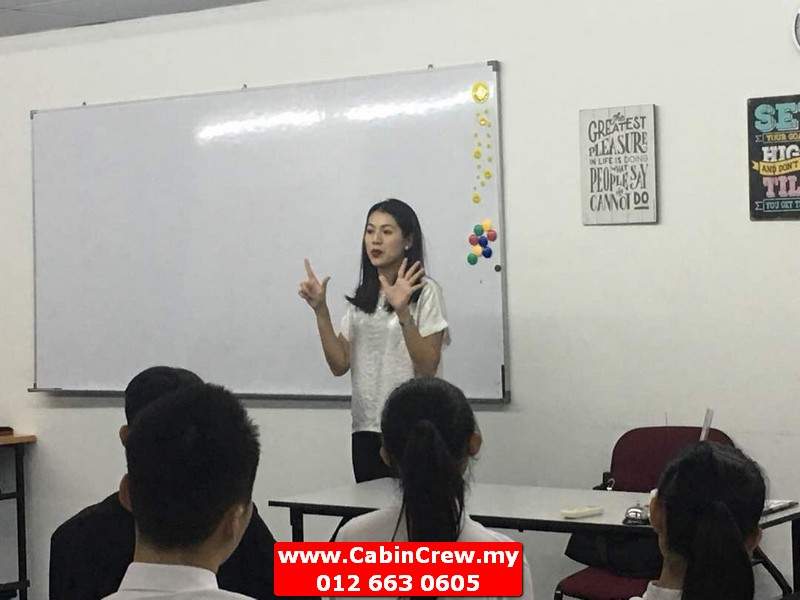
a. Classroom Instruction: Instructors provide theoretical knowledge through lectures, presentations, and discussions. Topics such as aviation regulations, safety procedures, and customer service techniques are covered in the classroom.
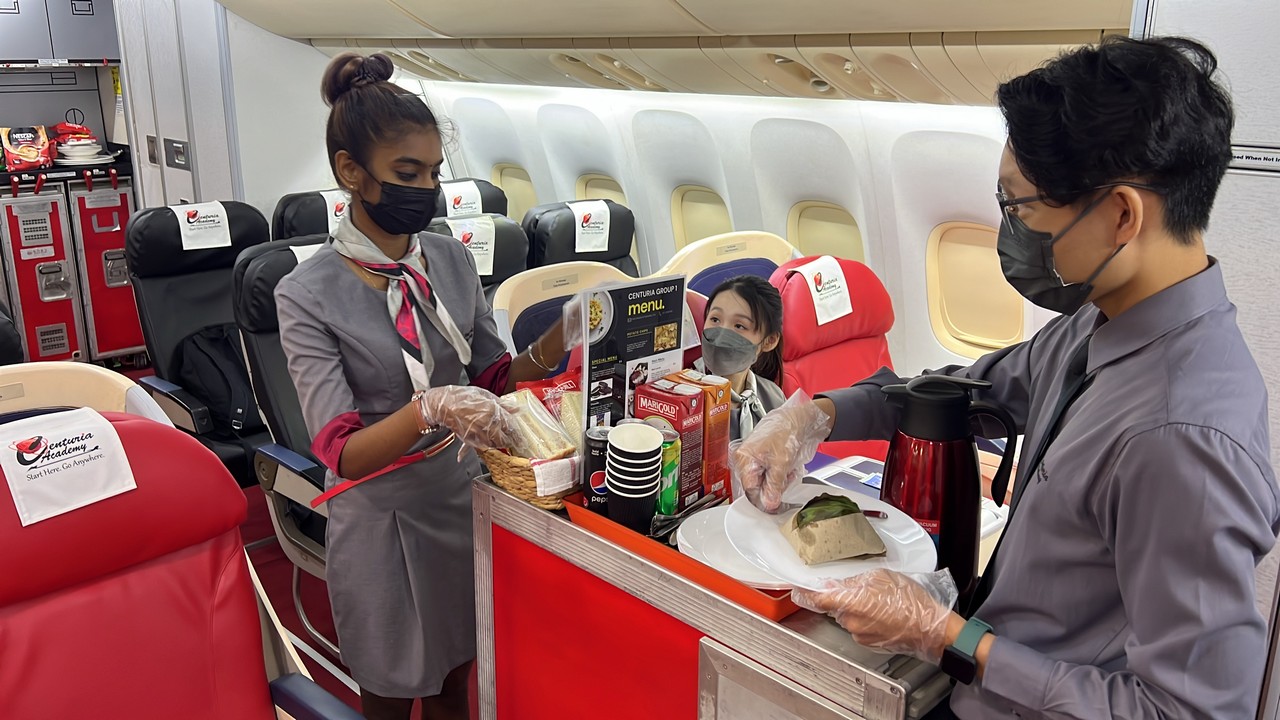
b. Practical Training: Students participate in hands-on exercises and simulations to practice safety procedures, emergency responses, and service protocols. Practical training often takes place in a mock cabin environment.
c. Role-Playing: Role-playing scenarios are used to simulate in-flight situations, such as dealing with difficult passengers or handling medical emergencies. This allows students to apply their knowledge in a realistic setting.
d. Language Training: If the course is designed for international travel, language proficiency is crucial. Language classes or assessments may be included to ensure that cabin crew members can communicate effectively with passengers.
e. On-the-Job Training: Some cabin crew courses may include a period of on-the-job training or internship with an airline. This provides students with real-world experience and exposure to the daily responsibilities of cabin crew members.
4. Duration and Certification:
The duration of a cabin crew course can vary depending on the institution and the depth of training. Typically, these courses last anywhere from a few weeks to a few months. Upon successful completion of the course, students are awarded a certification or diploma, which is often recognized by aviation authorities and airlines. Some courses may also include examinations and assessments to ensure that students meet the required standards.





5. Career Prospects:
Completing a cabin crew course opens up various career opportunities in the airline industry. Here are some potential career paths for cabin crew members:
a. Flight Attendant: The most common career choice for cabin crew course graduates is to become a flight attendant. Flight attendants are responsible for ensuring the safety and comfort of passengers during flights. They also provide in-flight services such as serving meals and beverages.
b. Senior Flight Attendant: With experience, flight attendants can advance to senior positions, where they may take on supervisory roles and mentor junior crew members.
c. In-Flight Supervisor or Manager: Some cabin crew members may pursue careers as in-flight supervisors or managers, overseeing the entire cabin crew team and ensuring that all operations run smoothly.
d. Corporate Flight Attendant: Corporate flight attendants work on private jets and charter flights, catering to the needs of executives and high-net-worth individuals. This role often involves higher pay and more personalized service.
e. Ground Crew: While not directly related to cabin crew roles, some graduates may choose to work in ground operations, including roles such as check-in agents, gate agents, or airline customer service representatives.
f. Cabin Safety Trainer: Experienced cabin crew members may transition into roles as cabin safety trainers, educating new recruits on safety procedures and emergency protocols.
Get Instant Reply
6. Conclusion:
In summary, a cabin crew course is a comprehensive training program designed to prepare individuals for fulfilling and dynamic careers in the airline industry. These courses cover a wide range of topics, including safety procedures, customer service, communication skills, and aviation regulations. Graduates of these courses can pursue careers as flight attendants, corporate flight attendants, in-flight supervisors, and more. The training methods used in these courses combine theoretical knowledge with practical experience, ensuring that cabin crew members are well-prepared to handle the challenges and responsibilities of their roles. Whether you dream of traveling the world while ensuring the safety and comfort of passengers or are seeking a dynamic career in aviation, a cabin crew course can be the first step towards achieving your goals in the airline industry.




Get Instant Reply
Cabin Crew Diploma Course in Malaysia
A cabin crew diploma course is a specialized training program designed to prepare individuals for careers as flight attendants or cabin crew members. These courses provide comprehensive training in various aspects of airline operations, safety procedures, customer service, and communication skills. In this detailed explanation, we will explore the key components of cabin crew diploma courses, including their curriculum, benefits, career prospects, and the skills and knowledge they impart.
1. Introduction to Cabin Crew Diploma Courses:
Cabin crew diploma courses are structured programs offered by aviation training institutions, flight academies, or airlines to educate and train individuals aspiring to work as flight attendants. These courses typically cover a wide range of topics and skills to ensure that cabin crew members are well-prepared to perform their duties effectively and efficiently.
2. Curriculum and Course Structure:
A typical cabin crew diploma course covers a diverse range of subjects to equip students with the necessary knowledge and skills. The curriculum can vary from one institution to another but often includes the following components:
2.1. Safety and Emergency Procedures:
- Firefighting techniques.
- Evacuation procedures.
- First aid and CPR.
- Handling emergency situations.
2.2. Customer Service and Hospitality:
- Interpersonal skills.
- Conflict resolution.
- In-flight service protocols.
- Passenger communication.
2.3. Aviation Regulations and Compliance:
- Understanding aviation laws and regulations.
- Security protocols.
- Cabin crew responsibilities under international aviation guidelines.
2.4. Aircraft Familiarization:
- Learning about various aircraft types.
- Understanding cabin layouts and equipment.
- Safety features and equipment location.
2.5. In-Flight Service Training:
- Food and beverage service.
- In-flight entertainment systems.
- Handling passenger requests.
2.6. Cultural Sensitivity and Diversity Training:
- Understanding and respecting diverse cultures.
- Handling passengers from different backgrounds.
2.7. Communication Skills:
- Effective communication with passengers and crew members.
- Announcements and instructions.
- Language proficiency (English is often a requirement).
2.8. Teamwork and Leadership:
- Working cohesively with fellow crew members.
- Leadership in emergency situations.
2.9. Grooming and Personal Presentation:
- Uniform and grooming standards.
- Personal hygiene and appearance.
2.10. Practical Training: – Mock-up aircraft for hands-on practice. – Role-playing exercises to simulate in-flight scenarios.
Get Instant Reply
3. Duration and Intensity:
The duration of cabin crew diploma courses can vary, but they typically last anywhere from 6 weeks to several months. The intensity of the training may also differ, with some programs offering full-time courses, while others provide part-time or weekend options to accommodate students’ schedules.
4. Benefits of Cabin Crew Diploma Courses:
Pursuing a cabin crew diploma course offers several benefits for individuals aspiring to work in the airline industry:
4.1. Industry-Specific Knowledge: These courses provide in-depth knowledge of aviation regulations, safety procedures, and customer service standards specific to the airline industry.
4.2. Skill Development: Students acquire a wide range of skills, including communication, problem-solving, conflict resolution, and teamwork, which are valuable not only in aviation but in various career paths.
4.3. Increased Employability: Completing a cabin crew diploma course enhances a candidate’s competitiveness in the job market, making it easier to secure a position as a flight attendant.
4.4. Networking Opportunities: Students often have the chance to connect with industry professionals and build a network that can be advantageous in their future careers.
4.5. Career Advancement: The training received in these courses can serve as a foundation for career advancement within the airline industry, such as moving into supervisory or managerial roles.
4.6. Personal Growth: Cabin crew training promotes personal development, including increased confidence, adaptability, and cultural sensitivity.
5. Admission Requirements:
To enroll in a cabin crew diploma course, candidates typically need to meet certain eligibility criteria, which may include:
5.1. Educational Qualifications: Most programs require a high school diploma or equivalent educational qualification.
5.2. Age Limit: Candidates are often required to be at least 18 years old, as this is the minimum age for flight attendants in many countries.
5.3. Physical Fitness: Airlines may have specific health and fitness requirements that candidates must meet, including height, weight, and vision standards.
5.4. Language Proficiency: Proficiency in the English language is commonly required, as English is the international language of aviation. Some airlines may also require proficiency in additional languages.
5.5. Background Check: Candidates must undergo background checks and security clearances, as cabin crew members are responsible for the safety and security of passengers.
Get Instant Reply
6. Training Facilities and Institutions:
Cabin crew diploma courses are offered by a variety of institutions, including:
6.1. Aviation Training Schools: These specialized schools focus on aviation-related education and training. They often have state-of-the-art facilities, including aircraft mock-ups for hands-on training.
6.2. Airlines: Some airlines have their own training academies where they offer cabin crew training to their future employees.
6.3. Community Colleges and Vocational Schools: These institutions may offer cabin crew diploma courses as part of their curriculum.
6.4. Online Courses: In recent years, some institutions have started offering online cabin crew courses, allowing students to complete their training remotely.

Get Instant Reply
7. Certification and Licensing:
Upon successful completion of a cabin crew diploma course, graduates are typically awarded a certificate of completion. However, to work as a flight attendant, they often need additional licenses and certifications, which may include:
7.1. Air Operator Certificate (AOC): This certificate is issued by the aviation authority of a specific country and allows the airline to operate commercial flights. Cabin crew members work under the AOC of their employing airline.
7.2. Safety and Emergency Procedures Certification: Flight attendants must demonstrate their knowledge of safety and emergency procedures and pass regular proficiency checks.
7.3. First Aid and CPR Certification: Flight attendants are usually required to maintain current first aid and CPR certifications.
7.4. Recurrent Training: Cabin crew members must undergo recurrent training to stay up-to-date with safety procedures and regulations.
8. Career Prospects and Opportunities:
A cabin crew diploma opens doors to a career in the airline industry with various opportunities for growth and advancement:
8.1. Flight Attendant: The most common career path for cabin crew graduates is to become a flight attendant, responsible for ensuring the safety and comfort of passengers during flights.
8.2. Senior Flight Attendant: With experience, flight attendants can advance to senior positions, where they may take on supervisory roles and mentor newer crew members.
8.3. In-Flight Supervisor: Some airlines have in-flight supervisors who oversee the cabin crew’s operations on a specific flight.
8.4. Ground Staff: Cabin crew members may also transition to ground-based roles, such as customer service representatives, check-in agents, or airline operations roles.
8.5. Corporate Flight Attendant: Experienced cabin crew members may choose to work as corporate flight attendants on private jets, serving high-net-worth individuals and corporate clients.
8.6. Cabin Crew Trainer: Those with extensive experience and knowledge can become cabin crew trainers, teaching the next generation of flight attendants.
9. Skills Acquired in Cabin Crew Diploma Courses:
Cabin crew diploma courses are designed to equip students with a wide range of skills and competencies, including:
9.1. Safety Skills: Graduates are well-versed in safety protocols and emergency procedures, ensuring the safety of passengers during flights.
9.2. Customer Service: Cabin crew members are trained to provide exceptional customer service, addressing passengers’ needs and ensuring a pleasant flying experience.
9.3. Communication Skills: Effective communication with passengers and crew members is a fundamental skill taught in these courses.
9.4. Problem-Solving: Cabin crew members learn to handle unexpected situations and resolve conflicts calmly and efficiently.
9.5. Teamwork: Working as part of a team is essential in the aviation industry, and graduates are trained to collaborate effectively with colleagues.
9.6. Cultural Sensitivity: In a global industry, understanding and respecting diverse cultures is crucial for providing top-notch service to passengers from around the world.
9.7. Time Management: Cabin crew members must manage their time efficiently to ensure that in-flight services run smoothly.
10. Conclusion:
Get Instant Reply
In summary, cabin crew diploma courses provide comprehensive training for individuals aspiring to work as flight attendants or cabin crew members in the airline industry. These courses cover a wide range of topics, including safety procedures, customer service, and communication skills. Graduates of these programs are well-prepared for the challenges and responsibilities of their roles, and they often enjoy a rewarding career with opportunities for growth and advancement within the aviation industry. Pursuing a cabin crew diploma is not only an investment in one’s career but also a pathway to personal growth and development.
Centuria Malaysia
CONTACT

Head Office
A-03-06, Level 3, Block A, Sunway Geo Avenue, South Quay ,Jalan Lagoon Selatan, Bandar Sunway ,47500 Petaling Jaya Selangor, Malaysia
Branch Office
No.820 & 822, Level 8, Block A4, Leisure Commerce Square, Jalan PJS 8/9, Bandar Sunway, 46150, Selangor, Malaysia.
Student Registration & Student Affairs Department
No.116, Level 1, Block A3, Leisure Commerce Square, Jalan PJS 8/9, Bandar Sunway, 46150, Selangor, Malaysia.
Business Hours: 8:30am – 5:00pm (Daily)
Enquiries: 012-663 0605
Cabin Crew Academy
CENTURIA ACADEMY SDN BHD
No. 820 & 822, Lvel 8, Block A4, Leisure Commerce Square, Jalan PJS 8/9, Bandar Sunway, 46150, Selangor Darul Ehsan
Tel: 03-78757877 / 016-2011018/ 016-2969161
Website: https://cabincrew.my
Cabin Crew Academy Malaysia – Centuria
Cabin Crew Training Exams
Cabin crew training exams ordinarily cover a great many points connected with the obligations and obligations of cabin crew individuals. The particular questions might change relying upon the airline or training program, however here are a few normal points and model questions that you could experience in a cabin crew training test:
Wellbeing and Crisis Procedures:
a. What are the essential obligations of cabin crew during a crisis clearing?
b. Depict the appropriate activity of the airplane’s crisis exits.
c. What moves ought to cabin crew make in case of a decompression crisis?
d. Make sense of the “hold onto something” position and when it ought to be utilized.
e. How might cabin crew handle raucous travelers during a flight?
Medical aid and Health related Crises:
a. What is the underlying reaction to a traveler encountering a respiratory failure?
b. Depict the means for directing cardiopulmonary revival (CPR).
c. How could cabin crew handle a traveler who is encountering a serious unfavorably susceptible response?
d. Make sense of the procedures for helping travelers with a potential irresistible illness installed.
e. What supplies are normally remembered for a cabin crew’s clinical unit?
Client support:
a. How could cabin crew welcome travelers and cause them to feel appreciated?
b. What steps can cabin crew take to handle traveler objections or tough spots?
c. Depict the legitimate help of dinners and drinks during a flight.
d. What are the vital components of powerful correspondence with travelers?
e. How might cabin crew help travelers with extraordinary necessities or solicitations?
Airplane Frameworks and Hardware:
a. Make sense of the elements of the different fastens, switches, and controls in the cabin.
b. Portray the sorts of wellbeing hardware accessible in the cabin and their purposes.
c. What is the job of cabin crew in setting up the cabin for departure and landing?
d. How could cabin crew answer smoke or fire in the cabin?
e. What are the procedures for working the airplane’s crisis oxygen framework?
Security:
a. What are the safety efforts cabin crew ought to follow to forestall unapproved admittance to the cockpit?
b. Portray the procedures for handling dubious things or travelers.
c. How might cabin crew answer bomb dangers or commandeering endeavors?
d. Make sense of the significance of crew carefulness and correspondence in keeping up with security.
e. Which job really do cabin crew play in guaranteeing traveler and crew security during fierce circumstances?
Flight Guidelines and Company Arrangements:
a. What are the administrative prerequisites for cabin crew qualifications and training?
b. How does the airline’s particular arrangements and procedures influence cabin crew’s liabilities?
c. Depict the job of cabin crew in agreeing with wellbeing and security guidelines.
d. What are the impediments on liquor utilization for cabin crew individuals?
e. How might cabin crew handle irreconcilable situations and moral predicaments?
If it’s not too much trouble, note that these are general models, and the genuine questions in a cabin crew training test might shift relying upon the airline and the particular training program. It’s crucial for audit the materials gave during your training and study the airline-explicit guidelines and procedures to guarantee your outcome in the test.
Related Search:
flight attendant course malaysia
cabin crew course in malaysia
cabin crew academy
cabin crew course college
cabin crew course college near me
air hostess course in malaysia
air hostess course fees
stewardess course
flight attendant school near me
flight attendant school online
course for flight attendant
cabin crew academy kl
cabin crew diploma
Get Instant Reply
- What is Cabin Crew Course
- SPM出来不用读4年 更不用2年 月收入也能稳拿RM4000 – RM15K 还可以免费去旅行
- Cabin Crew Course College
- Yuran Malaysian Flying Academy
- Malaysian Hospitality Academy
- Cabin Crew Training Courses
- Cabin Crew Course
- Flight Attendant Job
- Cabin Crew Interview 2018 Malaysia
- Flight Attendant Course
- Flight Attendant Training Schools
- Cabin Crew Interview
- What Courses to Take to Become A Flight Attendant
- Flight Training Academy
- Cabin Crew Academy in Malaysia
- Flight Attendant Salary
- How long is Flight Attendant School
- Cabin Crew interview questions and answers
- Cabin Crew Course Fees
- Why you want to be a cabin crew
- Flight Attendant Malaysia
- Cabin Crew Training
- Flight Attendant Training and Education
- How To Become A Flight Attendant
- Flight Attendant Qualifications
- Flight Attendant Uniforms
- Aviation Courses
- Flight Attendant Training
FOR IMMEDIATE RELEASE
Contact:
[Shirley Hew]
[CEO]
[Centuria Academy]
[[email protected]]
[6012-663 0605]
Official Press Release
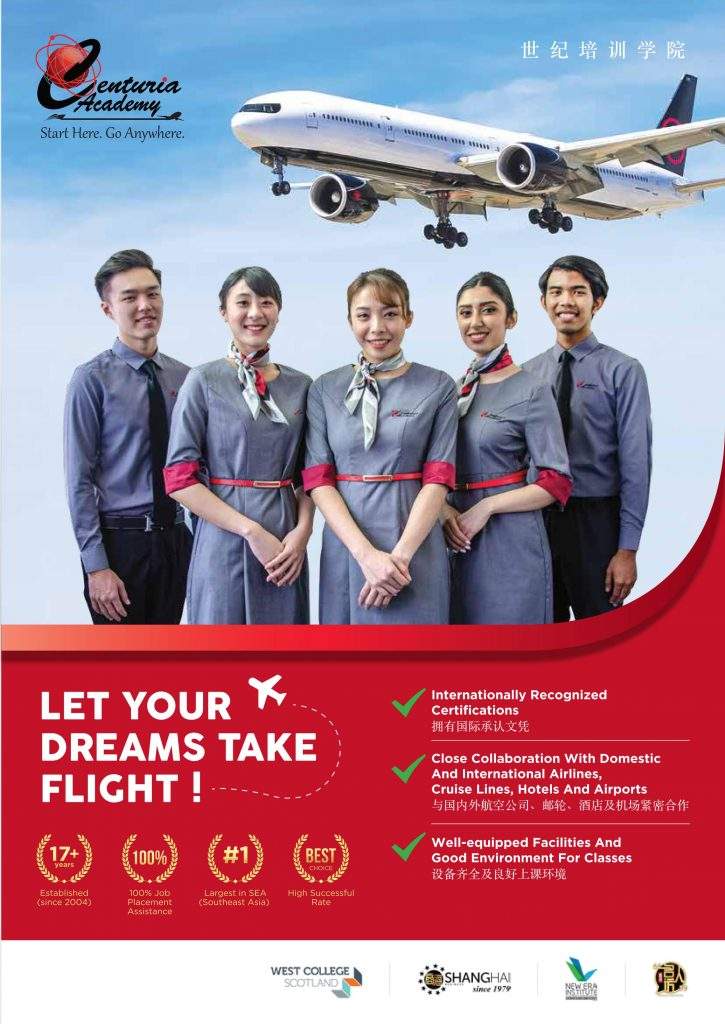
Centuria Academy Malaysia Launches Three Major Courses on cabincrew.my
[Petaling Jaya, Selangor] – Centuria Academy, a leading provider of aviation and hospitality education, is delighted to announce the launch of three major courses on their website, cabincrew.my. These courses cater to individuals seeking a rewarding career in the aviation and hospitality industry, offering comprehensive training and expertise in the field. This innovative course offers an array of resources and modules tailored to equip future cabin crew members with the essential skills and knowledge needed to excel in their roles.
The three flagship courses introduced by Centuria Academy are as follows:
Cabin Crew Diploma:
The Cabin Crew Diploma is designed to equip aspiring flight attendants with the necessary skills and knowledge to excel in their roles. This intensive course covers a wide range of topics, including safety procedures, customer service, in-flight service, and communication skills. Graduates of this program will be well-prepared for a dynamic and exciting career in the airline industry.
Cruise Operating Skill Course:
The Cruise Operating Skill Course is perfect for individuals who dream of working on luxurious cruise ships. This course provides a comprehensive understanding of cruise operations, guest services, and safety protocols. Students will learn about cruise ship management, event planning, and how to deliver exceptional customer experiences in a maritime setting.
General Management Diploma Course:
The General Management Diploma Course is ideal for those looking to advance their careers in the aviation and hospitality sectors. This program covers essential management principles, leadership skills, and business acumen. Graduates will gain a competitive edge in the industry by acquiring a deep understanding of general management practices.
“At Centuria Academy, we are committed to providing top-notch education and training to aspiring professionals in the aviation and hospitality fields,” said [Shirley Hew], [CEO] at Centuria Academy. “Our newly introduced courses are tailored to meet the evolving needs of the industry and prepare our students for successful careers.”
Key highlights of the courses include:
Comprehensive Curriculum: The course includes a wide range of modules, covering topics such as in-flight safety procedures, passenger service, emergency response, and cultural sensitivity.
Interactive Learning: Students can engage in interactive online lessons, quizzes, and assignments, providing a dynamic learning experience.
Experienced Instructors: The course is led by experienced cabin crew trainers who bring real-world insights and knowledge to the virtual classroom.
Flexible Scheduling: Centuria Academy understands the need for flexibility in today’s busy world. The course offers flexible scheduling options, allowing students to balance their studies with other commitments.
Career Development: Upon completion of the course, students will receive a certificate of achievement, enhancing their prospects for a successful cabin crew career.
Job Placement Assistance: Centuria Academy is committed to helping its students succeed. They offer job placement assistance and guidance to help graduates find employment opportunities in the aviation industry.
Centuria Academy has a team of experienced instructors who bring their industry expertise to the classroom, ensuring that students receive high-quality education and practical training.
To learn more about these courses and enroll, visit the official Centuria Academy website at https://cabincrew.my.
For media inquiries, please contact:
[Shirley Hew]
[CEO]
[Centuria Academy]
[[email protected]]
[6012-663 0605]
About Cabin Crew Course:
Centuria Academy is a leading platform dedicated to providing high-quality cabin crew training. With a commitment to excellence and a team of experienced professionals, Centuria Academy is the go-to destination for individuals aspiring to embark on a rewarding career in the aviation industry with a commitment to excellence and a team of experienced instructors, Centuria Academy offers comprehensive training programs that prepare students for successful careers in aviation, cruise ship operations, and general management.